CURRENT NEWS:
For Immediate Release 30 August 2024:
ADS-B Technologies Granted STC for Thomas Global Systems Part 25 Active Matrix Liquid Crystal Display
Anchorage, AK, August 22, 2024 - Anchorage-based ADS-B Technologies announced today that the Anchorage Aircraft Certification Office had issued a Part 25 aircraft AML STC for the Thomas Global System's TFD-4000/4100 Active Matrix Liquid Crystal Display. The Affected Model List includes more than two dozen business jet models. "Designed as a Plug & Play upgrade for aging CRT displays in older Bizjets, the TFD-4000/4100 is a practical upgrade that offers owners and operators a lower cost option and increased reliability over the aging cathode ray tube displays they are currently using," said Skip Nelson, President of ADS-B Technologies. "The TFD-4000/4100 can be quickly installed and requires no crew retraining or wiring changes."

TFD-4000/4100
The TFD-4000/4100 with STC ST02586AK is now available from authorized TGS dealers and installers.
ADS-B Technologies has developed more than fifteen general aviation avionics AML STC's during the past few years. The Company, founded in 2004, is also a recognized World Leader in ADS-B engineering and consulting services.
More information can be obtained by Contacting Us
For Immediate Release 30 April 2018:
ADS-B Technologies Granted STC for Thomas Global Systems TFD8601 Part 25 Active Liquid Crystal Display
Anchorage, AK, April 27, 2018 - Anchorage-based ADS-B Technologies announced today that the Anchorage Aircraft Certification Office had issued a Part 25 aircraft AML STC for the Thomas Global System's TFD8601 Active Liquid Crystal Display. The Affected Model List includes more than two dozen business jet models. "Designed as a Plug & Play upgrade for aging CRT displays in older Bizjets, the TFD8601 is a practical upgrade that offers owners and operators a lower cost option and increased reliability over the aging cathode ray tube displays they are currently using," said Skip Nelson, President of ADS-B Technologies. "The TFD-4000/4100 can be quickly installed and requires no crew retraining or wiring changes."
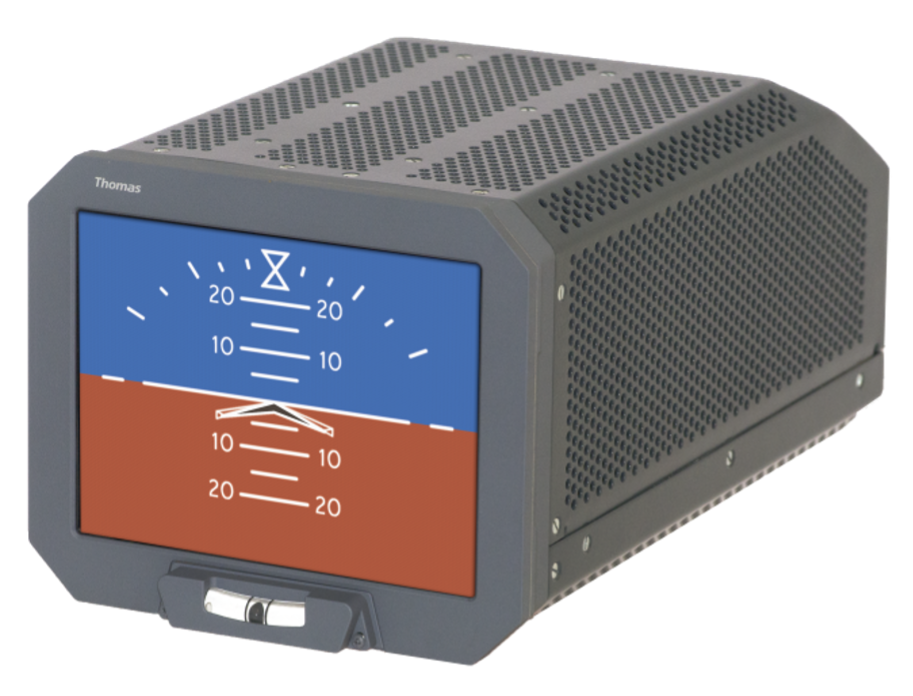
TFD8601
The TFD8601 with STC ST02499AK is now available from authorized TGS dealers and installers.
ADS-B Technologies has developed more than fifteen general aviation avionics AML STC's during the past few years. The Company, founded in 2004, is also a recognized World Leader in ADS-B engineering and consulting services.
More information can be obtained by Contacting Us
For Immediate Release 15 September, 2017:
ADS-B Technologies Moves to New Headquarters on Merrill Field Airport
Anchorage, AK, September 15, 2017 - ADS-B Technologies LLC has moved to a new 70,000 sq ft property on the West side of Merrill Field Airport. The pioneering ADS-B engineering company founded in 2004 had, for the past eleven years, been doing business from a 6,000 sq ft hangar and office also located on Merrill Field (PAMR). "Taking control of such a large piece of property is a bit daunting," commented ADS-B's President, Skip Nelson. "But, we've now expanded our office space to over 3,800 square feet with more than enough room for additional laboratory equipment and space for several more engineers. This kind of elbow room is going to be necessary to service the boom in the ADS-B industry that we see coming." The property also has two large hangars and room for more than a dozen tiedowns. Nelson plans to install a self-service aviation fuel pump, add an additional hangar and gradually expand the site into an FBO. ADS-B Technologies' new address is: 819 Orca Street, Anchorage, AK 99501, Telephone (907) 258-2372.
More information can be obtained by Contacting Us
For Immediate Release 30 May 2017:
ADS-B Technologies Granted STC for the L-3 ESI-500 Liquid Crystal Standby Instrument System for Part 23 Rotorcraft
Anchorage, AK, May 23, 2017 - Anchorage-based ADS-B Technologies announced today that the Anchorage Aircraft Certification Office had issued a Part 27 rotorcraft AML STC for the L-3 ESI-500 Standby Instrument System. The Affected Model List includes more than 10 rotorcraft models. "Designed as a simple and compact standby attitude and terrain awareness system for helicopters, the unit offers owners and operators a lower cost option for small helicopter panels.

ESI-500
The ESI-500 with STC SR02487AK is now available from authorized L-3 dealers and installers.
More information can be obtained by Contacting Us
For Immediate Release 28 September 2016:
NASA Completes Test Flight Using Globalstar and ADS-B Technologies' ALAS Tracking Solution
Anchorage, AK, September 28, 2016 - Globalstar Inc. (NYSE: GSAT) ) and its partner, ADS-B Technologies, announced the completion of the NASA Langley Research Center research flight with the Cirrus SR22 Unmanned Aerial System (UAS) Surrogate designed to test the operation of the ADS-B Link Augmentation System (ALAS). Initial results indicated continuous communication between the aircraft and Globalstar's satellite system with only brief interruptions during extreme maneuvering, which reconnected quickly.
The Cirrus SR22 test flights focused on testing the ability of ALAS to continuously pass two-way data between the aircraft and NASA's ground control station using remote control capabilities. The first of two 40 minute flights included extreme maneuvering with two 60 degree bank angle turns specifically designed to test the ALAS connection. The second flight produced similar results during a series of maneuvers involving heading and altitude changes.
"NASA not only demonstrated that ALAS could perform well in maneuvers, but also confirmed that complex data such as flight control commands and aircraft state and status could be passed to a controller over the same robust Globalstar link in real time," said Skip Nelson, President of ADS-B Technologies. "This tells us that ALAS could provide a single, secure and potentially encrypted portal between the aircraft and the ground."
"We are pleased to see ALAS perform well under the scrutiny of NASA level testing," commented Jay Monroe, Chairman and CEO of Globalstar. "ALAS is a reliable, economical flight tracking solution and we look forward to our continued work with aviation interests such as NASA to further leverage this innovative technology."
More information can be obtained by Contacting Us
Quoted From AOPA Technical Editor, Mike Collins July 21:
L-3´s Lynx NGT-9000 Receives AML STC
L-3´s LynxL-3 Aviation Products announced July 20 that its Lynx NGT-9000 MultiLink Surveillance System models are now included in the Approved Model List Supplemental Type Certificate (AML STC) for a large number of general aviation aircraft. With STC SA02444AK, the Lynx NGT-9000 joins the Lynx NGT-2000 and NGT-2500 as a certified solution that enables a wide number of GA aircraft to comply with the FAA´s mandate to equip with ADS-B Out capability by January 1, 2020. L-3 had received FAA Technical Standard Order authorization for the Lynx NGT-9000 earlier this year.
"Working in cooperation with ADS-B Technologies, we´ve now secured AML STC for all Lynx models," said Larry Riddle, L-3 Aviation Products´ Vice President of Marketing and Sales for Business, regional, and general aviation. "Lynx installations are greatly simplified with the AML STC, and the scope of the approved model list includes most general aviation aircraft targeted for ADS-B equipage."
L-3 said the Lynx NGT-9000 is the world´s first FAA-certified touchscreen, dual-mode 1090 and 978 MHz Mode S Extended Squitter (ES) transponder that is capable of displaying traffic and weather, improving pilot situational awareness with its integral ADS-B In capability. "Alaskan pilots and the Anchorage Aircraft Certification Office pioneered the development of ADS-B for general aviation through the Capstone Program in the early 2000s," added Skip Nelson, President of ADS-B Technologies. "Our more than 15 years of experience with ADS-B use and installation gave us key insights that helped streamline the STC project with L-3."
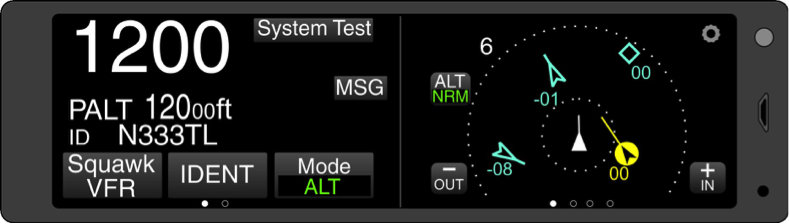

Click Graphic to Enlarge
ADS-B Technologies also developed the AML STC for L-3´s new NGT-1000/2000/2500 UAT Transponder. The Approved Model Lists for each of these models involved more than 1,100 different aircraft types. More information on the LYNX family of ADS-B transponders may be seen at www.l-3lynx.com/features.htm
For Immediate Release 10 March 2016:
ADS-B Technologies Granted STC for L-3 NGT-9000 ADS-B Transponder in Part 23 and Part 27 Aircraft
Anchorage, AK, May 4, 2016 - Anchorage-based ADS-B Technologies announced today that the Anchorage Aircraft Certification Office had issued Part 25 and Part 27 AML STC's for the L-3 NGT-9000/9000R ADS-B transponders. The Affected Model Lists includes more than 100 general Aviation aircraft and 30 Rotorcraft models.
NGT-9000
The NGT-9000/9000R with STC SA02444AK and SR02471AK are now available from authorized L-3 dealers and installers.
More information can be obtained by Contacting Us
For Immediate Release 8 March 2016:
ADS-B Technologies Expands ADS-B Avionics Installation Permission to More Than 100 Part 27 Rotorcraft Models
Anchorage, AK, March 8, 2016 - Anchorage-based ADS-B Technologies LLC announced today that the Anchorage Aircraft Certification Office had issued Part 27 rotorcraft AML STC's for the L-3 Avionics NGT-1000/2000/2500 and the NGT-9000 transponders. Both AML STC's were enormous - more than 100 rotorcraft included in each. "We were pleased that we were able to include so many General Aviation helicopters on just a single AML STC," commented Skip Nelson, president of ADS-B Technologies. "Part 27 STC's are significantly more difficult to write and those that apply to multiple rotorcraft types are not that common."
The two new STC's, which ADS-B Technologies was able write and flight test in less than four months, arrived just in time for Heli Expo 2016 held earlier this month. They were preceded by two extremely large (more than 1,200 models) Part 23 fixed wing AML STC's which the Company completed for L-3 Avionics Products in 2015.
ADS-B Technologies specializes in ADS-B product development, Affected Model List Supplemental Type Certification (AML STC) and Technical Standard Order (TSO) project work for the rapidly expanding ADS-B avionics market.
More information can be obtained by Contacting Us
For Immediate Release 12 August 2015:
ADS-B Technologies Will Assist NASA Langley Research Services Directorate With Space-Based ADS-B And Communications
(This Press Release Was Originally Issued By Globalstar, Inc.)
COVINGTON, LA , August 12 2015- Globalstar Inc.(NYSE MKT: GSAT), and its partner, ADS-B Technologies, LLC announced today that NASA Langley has selected ALAS space-based ADS-B technology for its two-way communications requirements relative to ongoing R&D work at the Langley Research Center. ALAS is a simple, low cost peripheral that is designed to be compatible with virtually any ADS-B avionics installation. It also does not interfere with the aircraft's normal ADS-B transmissions.
NASA requires two-way voice and data communications via Globalstar's newest satellite network as well as technical support for the installation, operation, maintenance, modification and training for the ALAS system. The ALAS system is the only compatible system with and complementary to the existing Globalstar voice, data, and subscription services that NASA Langley has previously purchased. ALAS was primarily chosen due to the proof of concept of the technology and available data speeds.
Globalstar recently completed its latest ALAS test flight across Canada, the majority of which is not covered by radar or terrestrial ADS-B, and to date has documented over 13,000 air miles utilizing its technology. A 7,000-mile demonstration from Alaska to the Gulf of Mexico and back was completed in September 2014.
"We are extremely pleased with the continued demonstrations of ALAS and the forthcoming partnership with NASA," said Skip Nelson, President of ADS-B Technologies. "With the additional 36 hours from our recent Trans-Canada flight, we now have almost 100 flight hours of data demonstrating ALAS performance reporting aircraft position every second during a flight. ALAS is also a more secure form of ADS-B, since the nature of the L-Band transmission and the antenna pattern make the aircraft's ADS-B position reports virtually impossible to intercept, jam or deceive."
"ALAS is a reliable, economical flight tracking solution and we look forward to working with aviation interests such as NASA to further leverage this innovative technology," said Jay Monroe, Chairman and CEO of Globalstar. "With our unique architecture and scalable capacity, the ALAS system is able to track aircraft effectively and consistently, second by second."
More information can be obtained by Contacting Us
For Immediate Release 3 August 2015:
ADS-B Technologies Completes Another Long Distance Flight Demonstration of Its Space-Based ADS-B System
ADS-B Technologies, LLC has announced that another public flight demonstration of its Space-Based ADS-B system (ALAS) which left Anchorage on July 21 landed at the 2015 EAA AirVenture Fly-In Convention at Oshkosh, Wisconsin on July 23. The flight covered more than 5,700 nautical miles and included a transit of Western Canada and a return flight across the Northern U.S., Rocky Mountains, Seattle and a final leg up Southeastern Alaska to ADS-B Technologies´ homebase in Anchorage on July 30.
The flight once again demonstrated that both 1090ES and UAT Space-Based ADS-B work well in all environments and for extended periods of time. "We now have more than 100 flight hours of data on ALAS´s performance," commented Mike Melum, ADS-B Tech´s Chief Scientist. "Although there are still some small holes in the Globalstar coverage, we did document accurate 1-second tracking and simultaneous Datacom for better than 96% of the flight on both the 1090ES and UAT links. This is not bad for an evolving system that will only get a lot better as Globalstar continues to upgrade its ground and satellite infrastructure."
"ALAS is a suprisingly simple, straight forward peripheral system that was designed to go in-line with virtually any 1090 MHz Extended Squitter or 978 MHz UAT transponder. It also works with either top, bottom, or dual ADS-B antenna installations in Part 23/25/27/29 aircraft," said Skip Nelson, the Company´s president. "Think of it as an alternate delivery system for an ADS-B equipped aircraft´s position reports. This is not just an aircraft tracking system that cranks out "bread crumb" GPS position reports at greater than one minute intervals - it´s a true ATC Critical Services system designed to provide separation between aircraft in flight."
The system is also capable of supporting simultaneous text data, UAT IN and Voice over the same L/S-Band satellite antenna. User costs are forecast to be significantly lower than the current rates associated with similar, yet less capable services like ADS-C. ALAS is also far more secure than terrestrial ADS-B, since the aircraft´s position is imbedded in a directional L-Band transport layer that is difficult to exploit, spoof or jam.

Click Graphic to Enlarge
ADS-B Technologies has partnered with Globalstar, Inc. (NYSE:GSAT), a world leader in satellite communications, to transmit the air traffic control data between the aircraft and its strategically placed satellite ground stations around the world. During the flight we also demonstrated live Globalstar SAT-FI internet and Satcom voice connections to the aircraft. Two low-cost Globalstar SPOT simplex tracking devices were also carried and effectively demonstrated their ability to deliver seamless and very accurate 2.5 minute position reports for the entire trip. More information on SPOT can be seen at www.FindMeSpot.com
A full press kit including broadcast quality video, logos and graphics is available upon request
For Immediate Release 3 September 2014:
ADS-B Technologies Completes a 7,000 nm Demonstration of Dual-Link Space-Based ADS-B
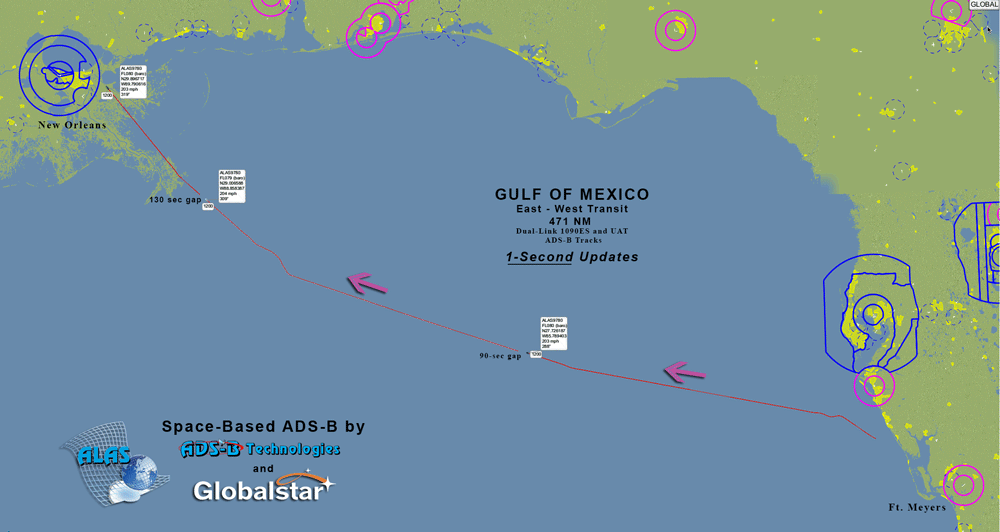
ADS-B Technologies, LLC has announced that the public flight demonstration of its Space-Based ADS-B system (ALAS) that began on August 19th with a departure from Anchorage and reached its zenith with a dramatic low altitude test flight across the Gulf of Mexico was completed with the test aircraft's return to its Anchorage homebase on September 2nd. The flight covered more than 7,000 miles and included an 1,100 mile round trip transit of the Gulf of Mexico, a direct flight from Phoenix to Seattle and extended flying over the Gulf of Alaska.
The purpose of the flight was to demonstrate that both 1090ES and UAT Space-Based ADS-B works in all environments and for extended periods of time. This "blunt weapon" approach was necessary because, quite frankly, despite many previous demonstrations in Alaska, many people still didn't believe that a little company from Alaska with only a handful of dedicated engineers could perfect a secure dual-link system so far in advance of their competition.
ADS-B Technologies´ALAS is designed to be a simple, economical and easily installed peripheral to virtually any existing 1090 MHz or 978 MHz ADS-B avionics source. User costs are forecast to be significantly lower than the current rates associated with similar, yet less capable services like ADS-C. ALAS is also far more secure than terrestrial ADS-B, since the aircraft´s position is imbedded in a directional L-Band transport layer that is difficult to spoof or jam.

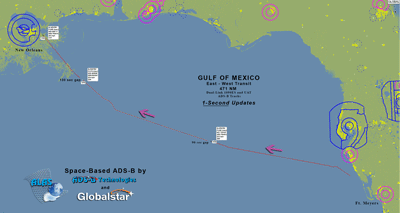
Click Graphic to Enlarge
ADS-B Technologies has partnered with Globalstar, Inc. (NYSE:GSAT), a world leader in satellite communications, to transmit the air traffic control data between the aircraft and its strategically placed satellite ground stations around the world. During the flight, ADS-B Tech's Chief Scientist and co-designer of ALAS, Mike Melum, not only transmitted simultaneous low latency 1-second reports on both ADS-B links, but also demonstrated live Globalstar SAT-FI internet and Satcom voice connections to the aircraft. Two low cost Globalstar SPOT simplex tracking devices were also carried and effectively demonstrated their ability to deliver seamless and very accurate 2.5 minute and 5 minute position reports for the entire 7,000 nm trip.
"SPOT´s simple, reliable and inexpensive approach to aircraft tracking makes me wonder why we haven't been requiring a device like this in commercial aircraft for a long time," commented Skip Nelson, ADS-B Technologies´s President. "Quite frankly, if we'd had one of these little battery operated devices on the dashboard of either Air France 447, or MH370 we probably could have tracked them to within a few miles. I don't get it - why do we always have to wait for the most complex and expensive solution..?"
A full press kit including broadcast quality video, logos and graphics is available upon request
For Immediate Release 7 May 2012:
ADS-B Technologies Successfully Tests NextGen Air Traffic Surveillance Using The Globalstar Satellite Network
ADS-B Technologies, LLC has announced the completion of the first public demonstration of its revolutionary space-based Automatic Dependent Surveillance-Broadcast (ADS-B) air traffic control surveillance system in the deep mountain passes of Alaska. The tests, conducted during the third week in April demonstrated conclusively that highly accurate, reliable and low latency surveillance is now possible at any altitude and over any terrain from virtually anywhere on earth.
"We chose the worst possible conditions for the test, assuming that if we could prove that an aircraft could be reliably tracked only a few hundred feet off the ground in a four thousand foot deep mountain pass, then it could be tracked just about anywhere else on earth," said Skip Nelson, ADS-B Technologies´ president. "The data that we collected from two aircraft - sometimes flying in close formation - clearly demonstrates that we have a viable system. Over-the-horizon, or space-based ADS-B is now a reality."
The new technology is called the ADS-B Link Augmentation System, or "ALAS". It is a true over-the-horizon air traffic surveillance system capable of delivering an uncorrupted 1090ES or UAT payload to an Air Traffic Control (ATC) automation system in real-time from remote, oceanic, or mountainous areas where a conventional line of sight connection to a terrestrial ADS-B ground station is either impossible, or impractical. ALAS is also designed to be unobtrusive and subordinate to conventional line of sight ADS-B and therefore will not interfere with normal payload delivery to other aircraft and to ground stations. 
ADS-B Technologies has partnered with Globalstar, Inc. (NASDAQ:GSAT), a world leader in satellite communications, to transmit the air traffic control data between the aircraft and its strategically placed satellite ground stations around the world. "We definitely prefer Globalstar´s relatively simple and straightforward "bent pipe" architecture for a safety centric business like air traffic surveillance," commented Mike Melum, ADS-B Technologies´ Chief Scientist. "There are fewer potential points of failure and so far, we see no technical barrier to tracking more than 3,000 aircraft in a roughly 1,000 mile diameter footprint from each Globalstar satellite. And, since all of the "brains" of the system remain on the ground rather than on satellites in space, maintenance, expansion and future modifications are going to be much easier and more economical to accomplish."
ALAS is designed to be a simple, economical and easily installed after market enhancement to virtually any 1090 MHz or 978 MHz ADS-B avionics source. User costs, some of which will be borne by the Air Navigation Service Providers and some by the aircraft operators themselves, are forecast to be significantly lower than the current rates associated with similar, yet less capable services like ADS-C.
"With Globalstar´s unique bent-pipe architecture, ground stations can be located close to air traffic control facilities in nations around the world," Nelson said. "This is not only safer and more efficient, but a nation´s ability to land its own ADS-B data within its own borders at a reasonable cost will encourage global harmonization and perhaps earlier worldwide adoption of ADS-B as a universal surveillance standard."
ALAS has been in development since 2009 and a fully certified version of the product is expected to be ready for market by mid 2014. Globalstar has already launched 18 of its 24 next generation low earth orbit (LEO) satellites and should be capable of covering most of the world´s busiest air routes by 2015. Full worldwide coverage, including north polar could be possible by 2017.
A full press kit including broadcast quality video, logos and graphics is available upon request
For Immediate Release 28 December 2011:
ADS-Technologies Responds to FAA NextGen Space - Based Air Traffic Control Provider Search
ADS-B Technologies recently responded to an FAA market survey request that would identify vendors who could provide a space-based Automatic Dependent Surveillance - Broadcast (ADS-B) service for remote mountainous areas in the US and in oceanic regions starting in 2018.
These systems would augment the FAA´s domestic ground-based ADS-B infrastructure, set to be operational as early as 2013 with full implementation in 2020.
The proposed ADS-B Technologies system would use the Globalstar (NASDAQ:GSAT) Second Generation Low Earth Orbit constellation and the Company´s proprietary ADS-B Link Augmentation System (ALAS™) avionics interface to provide real time aircraft position information to the FAA. The system has been designed to augment existing terrestrial systems by allowing aircraft to be precisely tracked by controllers in areas where conventional surveillance methods are either impossible or impractical to employ. In addition to FAA tracking, individual aircraft could be equipped to see each other and receive real time weather and airspace information from authorized sources on the ground. 
On December 28, six more second-generation Globalstar satellites were successfully launched from the Baikonur Cosmodrome in Kazakhstan, using the Soyuz launch vehicle. This was Globalstar´s third successful multi-satellite launch in a little more than a year.
"This means that Globalstar is now three-quarters of the way toward its goal of launching 24 new high speed, high capacity satellites capable of supporting our NextGen space based air traffic management system," said Skip Nelson, president of ADS-B Technologies LLC. "And it also means that we are on track for full scale operational testing by late 2014, should the FAA or any other civil aviation organization require it."
The unique combination of the ALAS avionics interface and Globalstar´s relatively straight forward and reliable "bent pipe" architecture will allow virtually any 1090 MHz Extended Squitter (ES) or 978 Megahertz Universal Access Transceiver ADS-B source to report an aircraft´s position to ATC in real-time (<400ms). An additional advantage of the Globalstar system is that all of the unique ADS-B components remain on the ground where repairs and upgrades are easily accomplished.
"Simplicity may be the key to establishing the kind of reliability that a safety-oriented business like air traffic control requires," Nelson said. "Globalstar´s large number of ground stations means fewer and shorter hops between the satellite and the ATC point of service and thus fewer potential points of failure. This should also promote global harmonization since it also means that more nations will be able to land their own surveillance data inside their own borders with a standardized set of protocols."
For Immediate Release 22 July 2011:
ADS-B Technologies and Globalstar Connect to Create Worldwide Air Traffic Network
To help meet the NextGen agenda for air traffic management, ADS-B Technologies LLC has teamed with Globalstar, Inc. to develop a worldwide leading edge satellite based air traffic control management system.
On July 13 six new second-generation Globalstar satellites were successfully launched from the Baikonur Cosmodrome in Kazakhstan, using the Soyuz launch vehicle. "This means that Globalstar is halfway to its goal of adding 24 new second-generation satellites to its constellation,"said Robert "Skip" Nelson president of ADS-B Technologies LLC. "And with these new satellites, ADS-B Technologies is now almost halfway to our goal of creating a system that can someday provide satellite based ADS-B on a global scale."
ADS-B Technologies now has a formal 10-year agreement with Globalstar, Inc. (NASDAQ:GSAT), announced on May 10, 2011 to use its proprietary ADS-B Link Augmentation System ALAS™ technology on Globalstar´s Second - Generation satellite constellation. The ALAS™ system, which will use Globalstar´s network of satellites and ground stations to provide both ADS-B surveillance and communications services on a global scale, was first announced to the public at the Integrated Communications, Navigation and Surveillance Conference in Herndon, VA in May 2010. 
"The system will be compatible with virtually any 978 Megahertz Universal Access Transceiver, or 1090 MHz Extended Squitter (ES) ADS-B avionics source," Nelson said. "The higher data transfer rate that Globalstar´s new constellation will provide is absolutely necessary for ADS-B link augmentation."
The ALAS™ system is designed to augment existing ADS-B networks commissioned by the Federal Aviation Administration as well as systems in Australia and Europe to create trans-oceanic and remote services well out of the range of conventional ground based networks. It also has the potential to offer the real-time backhaul of Flight Data Recorder information, UAS sensor data, bi-directional meteorological data and bi-directional voice in a wide range of avionics and air traffic management applications.
According to ADS-B Technologies Director, Dr. Fred Fish, "So far, industry response and peer reviews have been quite positive. Airborne testing and the certification process will continue for another year or so and we´re on schedule for an initial commercial demonstration sometime in mid-2013."
For Immediate Release 11 June, 2010:
ADS-B
Technologies Selected as Subcontractor on $1.2B FAA Support Contract
ADS-B Technologies has been selected as a subcontractor and Core Member on the General Dynamics' team for the Federal Aviation Administration's (FAA) System Engineering 2020 Research and Development/Mission Analysis Support program. The ten-year contract awarded to the Team has a maximum potential value of $1.2 billion if all options are exercised. Funding will be awarded through individual task orders.
Through this program, the Team will support the FAA's NextGen modernization program to improve safety and bring greater efficiencies to the U.S. airspace system by providing research and development and systems engineering services. ADS-B Technologies' work may focus on using its expertise in the field of Automatic Dependent Surveillance - Broadcast (ADS-B) technology to help the FAA's Air Traffic Control and Next Generation (NextGen) modernization program in improving the safety, capacity and efficiency of the country's airspace.
ADS-B Technologies' fellow Core Members on the contract include Gulfstream Aerospace, Jet Aviation, Advanced Aerospace Solutions, Alaska Airlines, Applied Systems Intelligence, Avidyne Corp., BAE Systems, Baron Services, Center for Network Centric Product Support Research, Cirrus Aircraft, Conklin de Decker, CSSI, FlightSafety International, Hi-Tec Systems, Infina Corp., Innovative Solutions International, Interim Solutions for Government, Sikorsky Aircraft, SRA International, Universities Space Research Association.
The complete contract, which also includes separate awards to teams headed by Boeing, ITT and Metron Aviation represents a total award worth potentially $6.5 billion over 10 years. It is the largest set of awards in FAA history.
For Immediate Release 16 May, 2010:
ADS-B
Technologies Unveils Satellite Hosted ADS-B Link
Augmentation System (ALAS)
ADS-B Technologies introduced its new Automatic
Dependent Surveillance - Broadcast peripheral system
called the ADS-B Link Augmentation System, or
ALAS™ at the 2010 ICNS Conference in Herndon, Va
last week. The Patent Pending system enables aircraft
to maintain non-line-of-sight air-to-ground
surveillance, data, and voice communication on a
world-wide basis and in real-time as a supplement to
primary line-of-sight (LOS) ground-based ADS-B systems.
ALAS uses MOPS compliant 978MHz ADS-B technology and
voice communications via a proprietary Low Earth Orbit
(LEO) satellite link on a non-interference basis with
primary LOS ground-based surveillance, data and voice
communications systems.
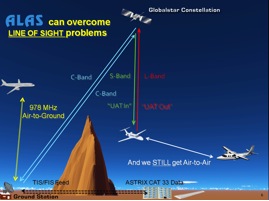
Current primary data communication systems are
dependent upon ground-based transceivers to convey a
variety of information, including surveillance and
voice for Air Traffic Control, weather data, and
operator communications. These air/ground radio
frequency links are, in most cases, limited to direct
LOS communication. Mountain ranges, expansive open
water and the curvature of the earth all limit the
effective range of conventional systems to relatively
short distances and those aircraft beyond LOS range
frequently fly without the benefits of high fidelity
surveillance. While many international transport
category aircraft do use non-LOS links such as the
FANS-1 and ADS-C, operations utilizing these systems
are necessarily constrained to “procedural”
aircraft-to-aircraft separation spacing, rather than
more efficient surveillance separation spacing, based
largely on the limitations of the functional
architecture supporting those systems.
ALAS now provides a way to extend the surveillance
and communications capabilities of current NextGen
ADS-B networks to very remote, or oceanic areas beyond
the practical capabilities of systems with terrestrial
antennas. Primarily designed to support the
bi-directional 978MHz UAT link protocol, the system can
be used with the 1090MHz Extended Squitter link as
well. An important feature of the ALAS system is that
it is designed to work as a peripheral device and is
thus compatible with almost any ADS-B avionics or
Ground Based Transceiver system. Bi-directional link
encryption is not only possible, but also somewhat
inherent due to the system's design.
The system has been in development and airborne
testing for more than three years. Globalstar, Inc.
will provide the satellite backbone for the technology.
Evaluation units should become available no later than
4th Quarter 2011.
For Immediate Release 11 December,
2009:
ADS-B
Technologies Supports UAV Design
ADS-B Technologies recently supported the Korea
Aerospace Research Institute (KARI) in its Smart UAV
program by installing a Portable ADS-B Airspace
Management System in the Institute's state of the art
Mobile UAV Command and Control Unit at the Goheung,
South Korea Research Center. The Company also provided
Garmin GDL90 UAT transceivers for installation in two
of the Institute's full size SUAV models.

"ADS-B Tech is proud to be associated with KARI.
We're really looking forward to collaborating on the
Sense and Avoid aspects of the project," said CEO Skip
Nelson. "The Smart UAV is certainly one of the most
unique unmanned vehicle designs we've ever seen. The
extremely fine detail that we see in their test and
development program indicates that this versatile
little Tiltrotor should be an incredibly reliable
platform for a wide range of scientific payloads."
KARI's engineers and academics have devoted more
than eight years to perfecting the Smart UAV design.
The vehicle will be used primarily for civilian
purposes. It can takeoff vertically like a helicopter,
then transition to forward flight and accelerate to
more than 200 mph for long range missions. It may enter
the commercial market in 2011.
Archived News:
Released 3 June,2008:
In the Shadow of
the Great Wall, ADS-B Becomes a Key Component in
China's First Dedicated General Aviation
Airport
ADS-B Technologies has completed its seventh ADS-B
(UAT) Ground Broadcast Transceiver (GBT) site in China
at the Badaling Great Wall Airport, one hour North of
Beijing.
"This airport is essentially a prototype for General
Aviation Airports all over China," commented ADS-B
Technologies' President, Skip Nelson. "Everything about
it is designed to develop and test the infrastructure
for what we hope will be a large and vibrant private
aviation sector in this country."
Located forty-five miles North of Beijing and within
sight of the Great Wall, the airport is owned by
Jinggong General Aviation Corporation, part of Jinggong
Industries, a large Chinese conglomerate that produces
everything from heavy machinery to some of China's best
wine. Jinggong's vision for the airport is to use it as
a model for dozens of similar airfields it plans to
develop throughout the country.
"We were impressed by Jinggong's foresight in
incorporating ADS-B into Badaling's Master Plan. Right
from the beginning, they are going to have a very safe
and efficient operation that will promote GA and
private aircraft ownership here in China," added Scott
Jiang, ADS-B Tech's Asian VP.
The airport has a large administration building and
supports a flight school, flying club and licensed
repair facility. Jinggong GA is also an authorized
reassembly facility for Cirrus and a sales and
installation center for ADS-B Technologies.
ADS-B Technologies is an Alaska-based engineering
firm specializing in the deployment of fully
integrated, turn-key ADS-B systems around the world.
Released 25 April, 2008:
Portable ADS-B
Airspace Management System Announced
ADS-B Technologies has successfully tested its new
ADS-B Mobile Control Unit (AMCU) under actual field
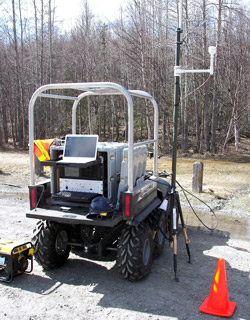
conditions in Alaska. The rugged air-transportable unit
is designed for remote and tactical applications where
temporary airspace management, dispatch, or flight
following may be required.
"AMCU is capable of monitoring and coordinating the
operations of any number of 978 MHz UAT equipped
aircraft from unimproved field sites," said Dave
Palmer, ADS-B Tech's ATC Technical Director. "This
system is going to be ideal for controlling the air
picture over forest fires, disaster sites and in
tactical applications where a highly accurate and
reliable real-time surveillance system needs to be
deployed fast."
The basic AMCU package weighs 62kg and can be expanded
to include a wide range of power, communications and
display options. Set-up time is usually less than 30
minutes.
Released 5 September, 2007:
ADS-B
Technologies Teams With Cirrus To Introduce New
Aircraft Into China
Acknowledging the potential benefits of ADS-B
technology in both the pilot training market and the
personal transportation airplane market in China,
Cirrus Design Corporation and ADS-B Technologies have
agreed to work together to offer Chinese customers the
opportunity to have ADS-B on all Cirrus aircraft sold
in China beginning in January, 2008.
CIRRUS International Managing Director John M.
Bingham said, "Both CIRRUS and ADS-B Technologies have
been heavily involved in China over the past few years.
China has already adopted ADS-B in some of its flight
schools. We believe that offering ADS-B on our
airplanes sold in China will greatly support the
development of general aviation in China by enabling
China to open up more of its air space."
"Our company's ground-breaking work with the Civil
Aviation Flight University of China pioneered ADS-B in
the region," added Skip Nelson, ADS-B Technologies'
President. "We have a unique understanding of China's
GA needs and feel that Cirrus' innovative approach to
engineering, style and safety, when combined with the
efficiency of ADS-B based Air Traffic Management, could
make them an icon for the freedom to own and operate
private aircraft throughout the country."
Based in Minnesota, USA, CIRRUS is a recognized
global leader in the manufacturing of personal aviation
aircraft that provides unprecedented levels of
performance, quality, and safety. Their popular SR20
and SR22 composite airplanes incorporate innovative,
advanced technologies into their design, including the
unique CIRRUS Airframe Parachute System (CAPS). The
SR22 is the best selling airplane in the world
today.
ADS-B Technologies is an Anchorage, Alaska based
company specializing in the deployment of fully
integrated, turn-key ADS-B systems around the world.
Released 22 June, 2006:
ADS-B Flies For
the First Time in Africa
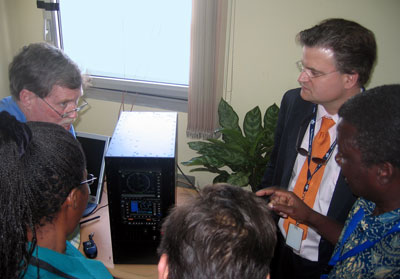
At 1200 (Dar es Salaam time) on 14 June, 978MHz ADS-B
(UAT) was used for the first time on the African
Continent. A Tanzanian Air Services Cessna 206,
equipped with a Garmin GDL90, was tracked by a UAT
ground station during a 45 minute flight from Dar es
Salaam International Airport (DAR). The flight, which
met all operational objectives, was conducted by ADS-B
Technologies and was observed by officials from six
African nations, ICAO, FAA and the World Bank.
The demonstration was part of a two day World Bank
conference held to discuss the Bank's basic aviation
infrastructure funding project for the East African
Community. This is the second time the Alaska-based
ADS-B Air Traffic Management integration firm has
achieved a similar milestone, the first being the
introduction of UAT to Asia, during trials in Guanghan,
China in July 2005.
The company is currently working with the Civil
Aviation Flight University of China and the CAAC on a
project to install Garmin ADS-B avionics in more than
150 of the University's training aircraft and five
Sensis Corporation 978MHz Ground Broadcast Transceivers
in Sichuan Province, China."

Released 12 November, 2005:
First Permanent
ADS-B Ground Station Installed in
China
On November 3rd, Anchorage, Alaska based ADS-B
Technologies completed the installation of the first
permanent Ground Based Transceiver (GBT) at the Civil
Aviation Flight University of China's main campus in
Guanghan, Sichuan Province. Two of the University's
Garmin GDL90 UAT equipped Piper Seminole aircraft
participated in the acceptance test by transmitting
position data to a Sensis Corporation GBT.
"We had no problem setting up the Sensis equipment,
it's very solid stuff," said Skip Nelson, ADS-B
Technologies' President. "Unlike radar which typically
has moving parts, this equipment is all solid state and
built for thousands of hours of virtually
maintenance-free operation."
Nelson said his firm also recorded another first by
demonstrating a wireless cockpit interface between the
aircraft's Bluetooth UAT interface and HP 4705 hand
held displays.

The firm now plans to deliver more than 160 avionics
packages and six GBT's to the University during 2006.
Meanwhile, encouraged by UAT's initial success, the
Civil Aviation Authority of China continues to evaluate
UAT for broader deployment in their country.
Released 16 July, 2005:
ADS-B Flies For
The First Time In China
At 0915L, 15 July, two Piper Seminoles from the Civil
Aviation Flight University of China (CAFUC) flew into
history as the first aircraft to use 978MHz Automatic
Dependent Surveillance - Broadcast (ADS-B) equipment
outside of the U.S.. The aircraft, based at the
University's Guanghan campus, were equipped with Garmin
GDL90 UAT transceivers and were tracked with a
prototype ground station developed by ADS-B
Technologies.
"The test flights exceeded all our expectations - we
tracked both aircraft continuously from power-up to
shutdown and out to more than 80km, despite a
relatively low antenna position at the ground site,"
Skip Nelson, ADS-B Technologies' President commented.
"More than fifty University representatives, Chinese
Civil Aviation Administration (CAAC) officials and a
World Bank observer watched as we vectored the aircraft
out to 60km separation and then back in for a 300 meter
close approach to each other."
 
The five day trials, which included installing
Garmin equipment in the first two aircraft, are part of
a broader agreement between ADS-B Technologies and
CAFUC, that will eventually equip more than 100 of the
University's trainers with ADS-B. "The most exciting
thing is that this could be a prototype of a new low
altitude surveillance architecture for General and
Business aviation in China," Nelson continued. " We're
already looking at Beijing-Shanghai-Hong Kong and
Beijing-ChengDu as possible ADS-B enabled GA
routes."
ADS-B Technologies is an Anchorage, Alaska based
aviation consulting firm that specializes in new air
traffic management technologies. The Civil Aviation
Flight University of China is Asia's largest aviation
school, with more than 6,000 students enrolled.

|